Theater of Dionysus
Film yourself reciting by memory one passage from Euripides, Bacchae on the stage of the Theater of Dionysus. You can also film right outside the fence but it is more fun on the actual stage.
Plaka and Monastiraki
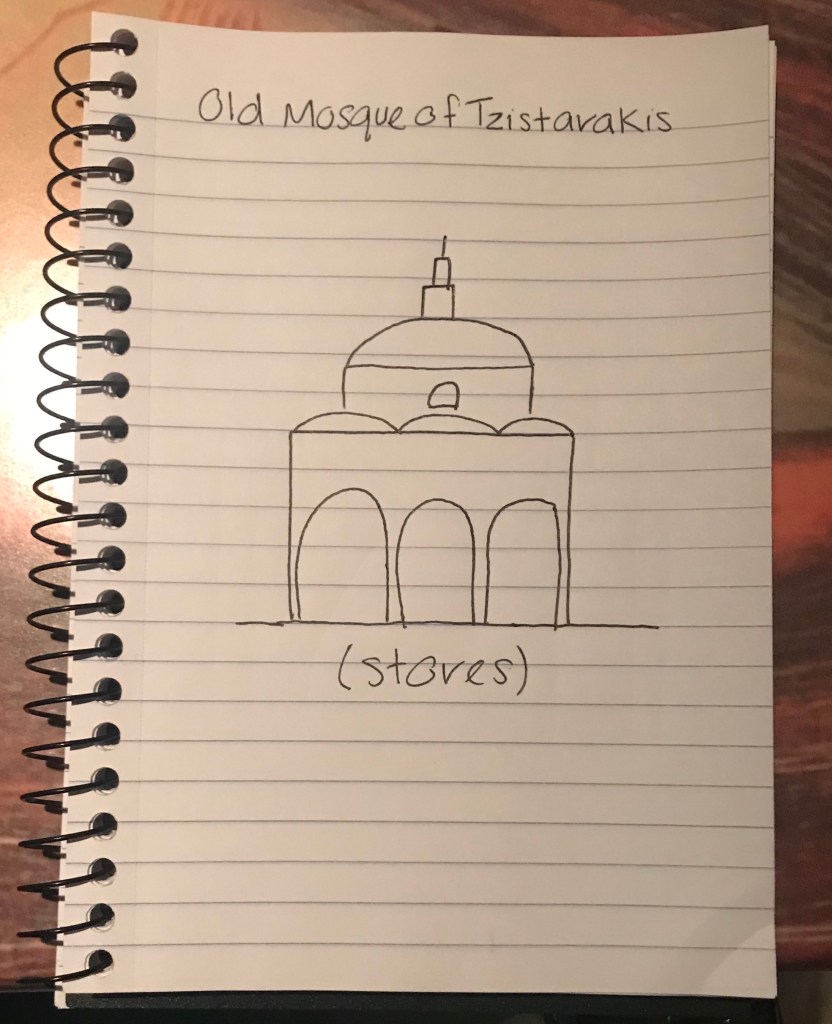
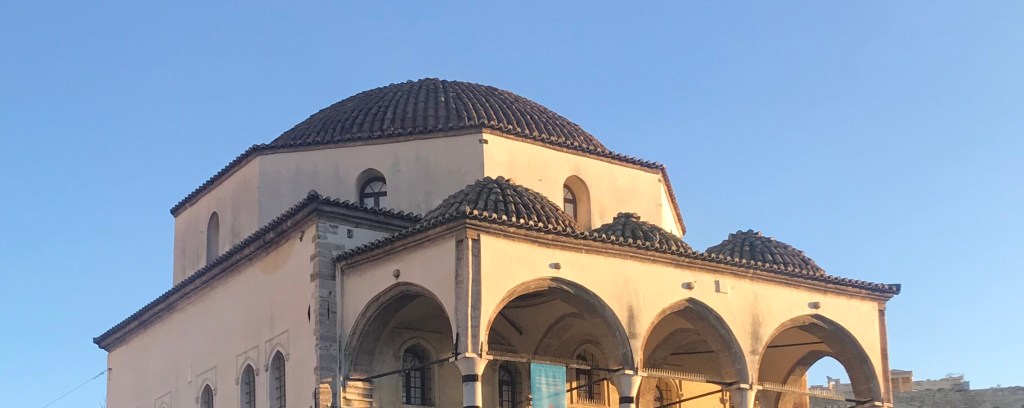
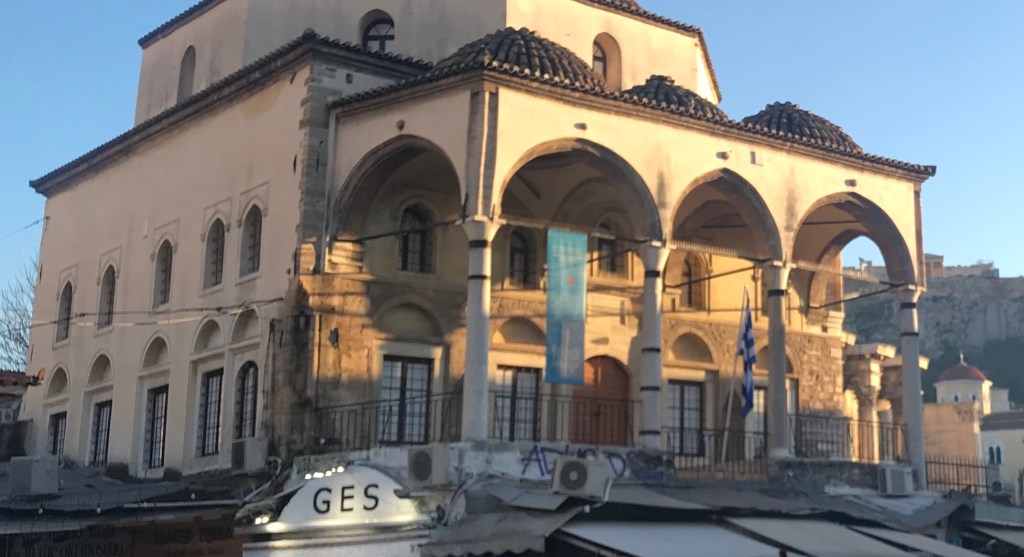
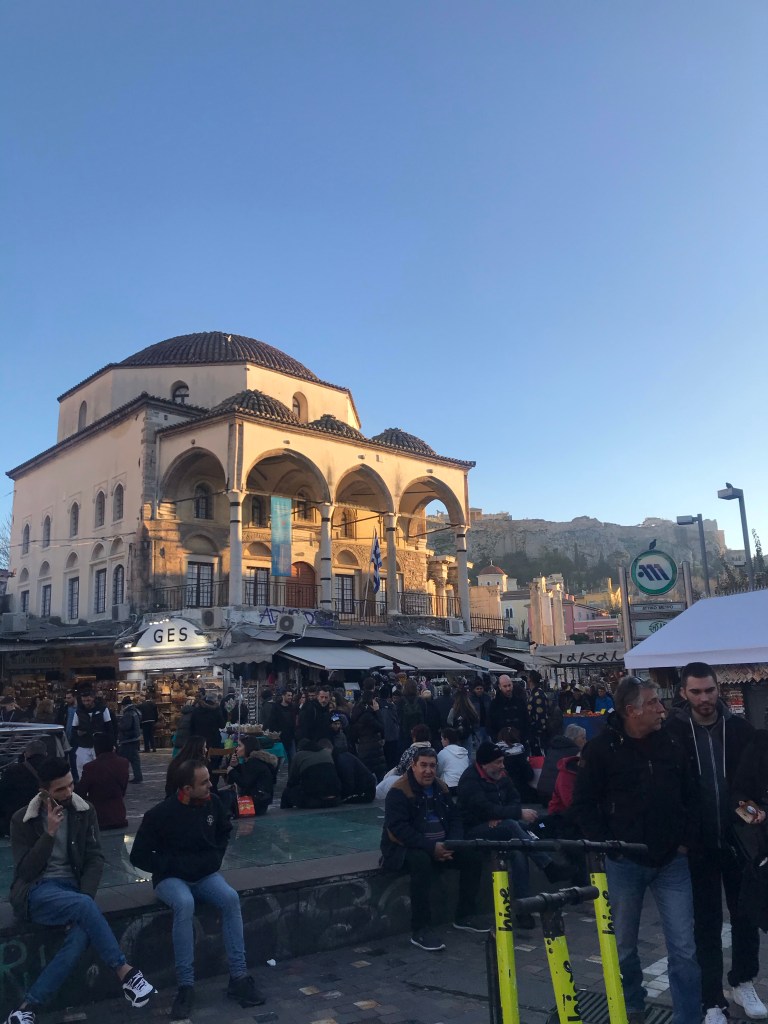
Photograph three interesting features of the old Mosque of Tzistarakis. Draw a version of it with the minaret. Where do you find Arabic writing on the building?
You can find Arabic writing on the mosque above the door in the front.
Tower of the Winds
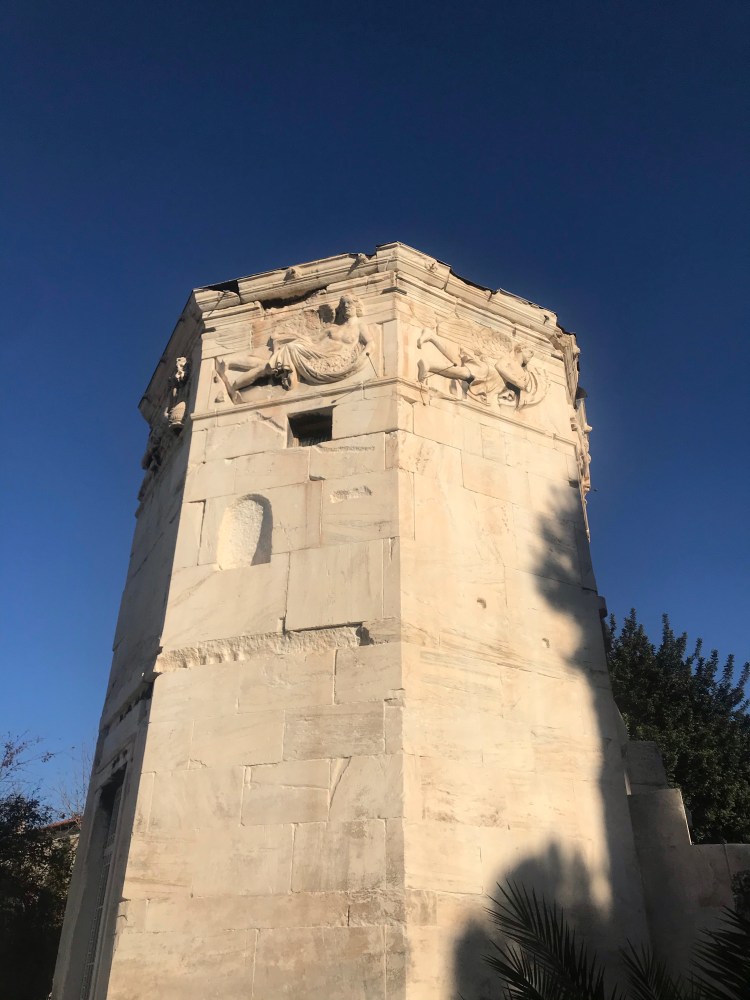
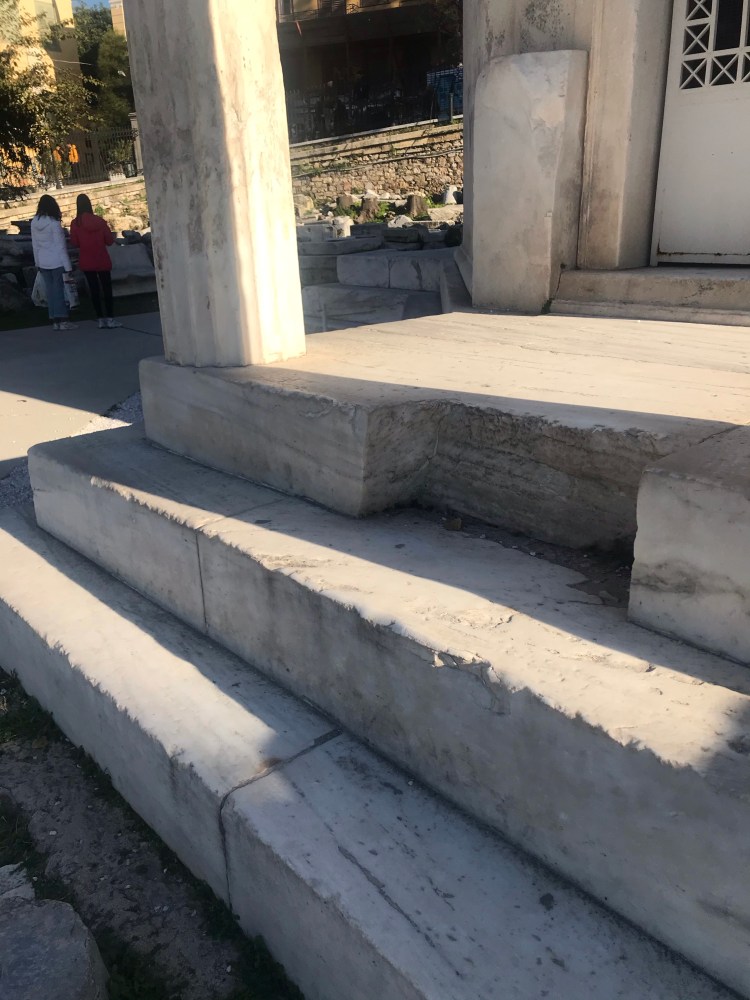
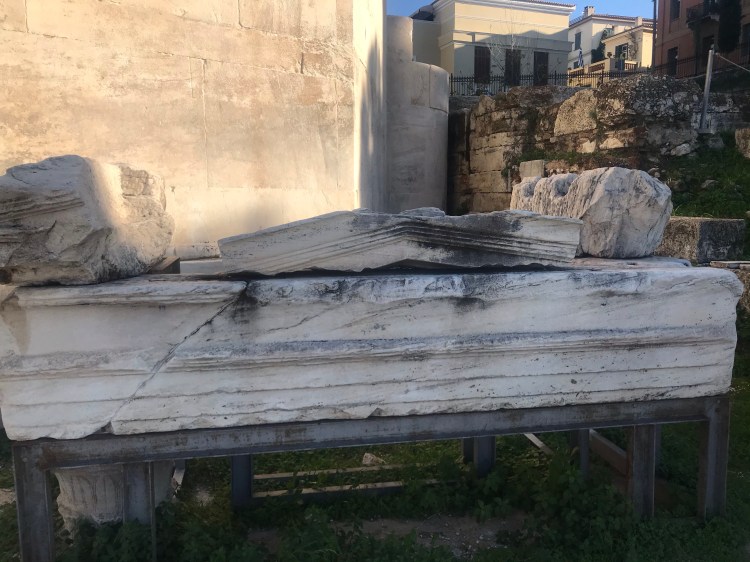
Photograph three interesting details of the Tower of the Winds. Write a short but detailed description of the different functions the building has served.
The building served as a wind vane on the top and also had a water clock that powered by a hydraulic mechanism that was inside the building. It was powered by water pressure which came from the south side of the monument. It also served as a church in the Byzantine period. It has christian content that dated to the 13th and 14th century that are still on the monument. During the late Ottoman occupation it also served as takke, which is a place used for retreats and spiritual gatherings of the Sufi brotherhood. It is now used as a monument after it was unearthed from being buried.
Hadrian’s Arch
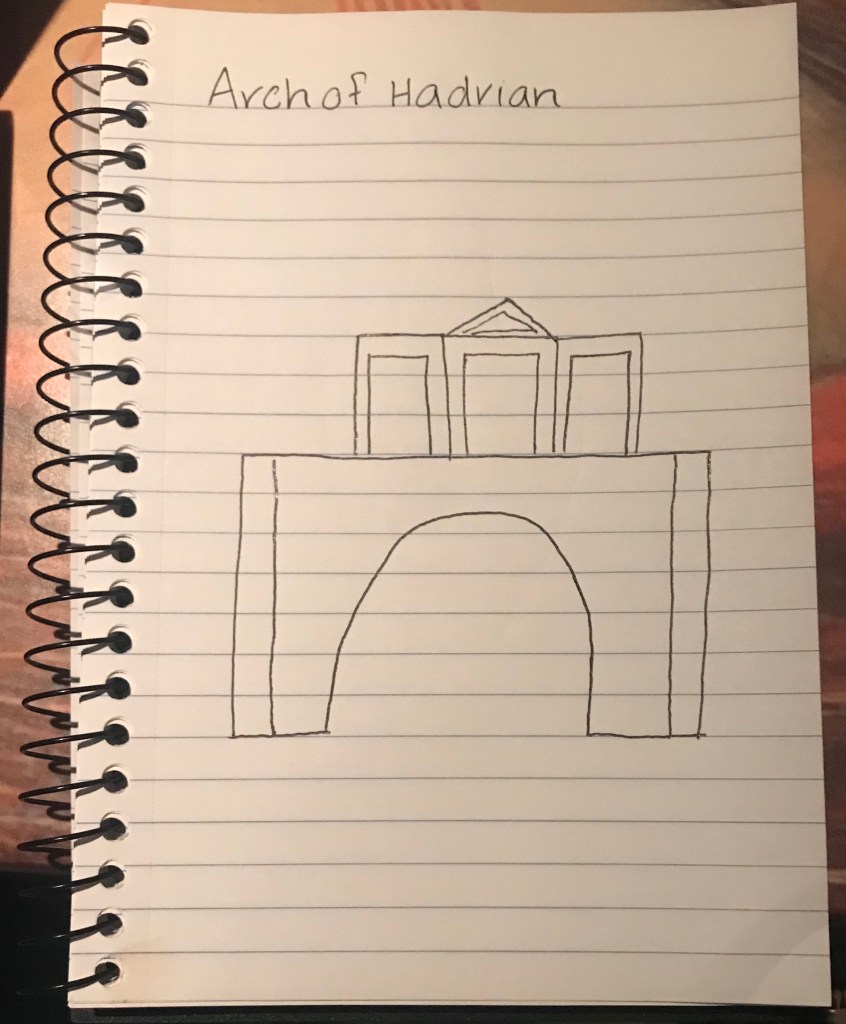
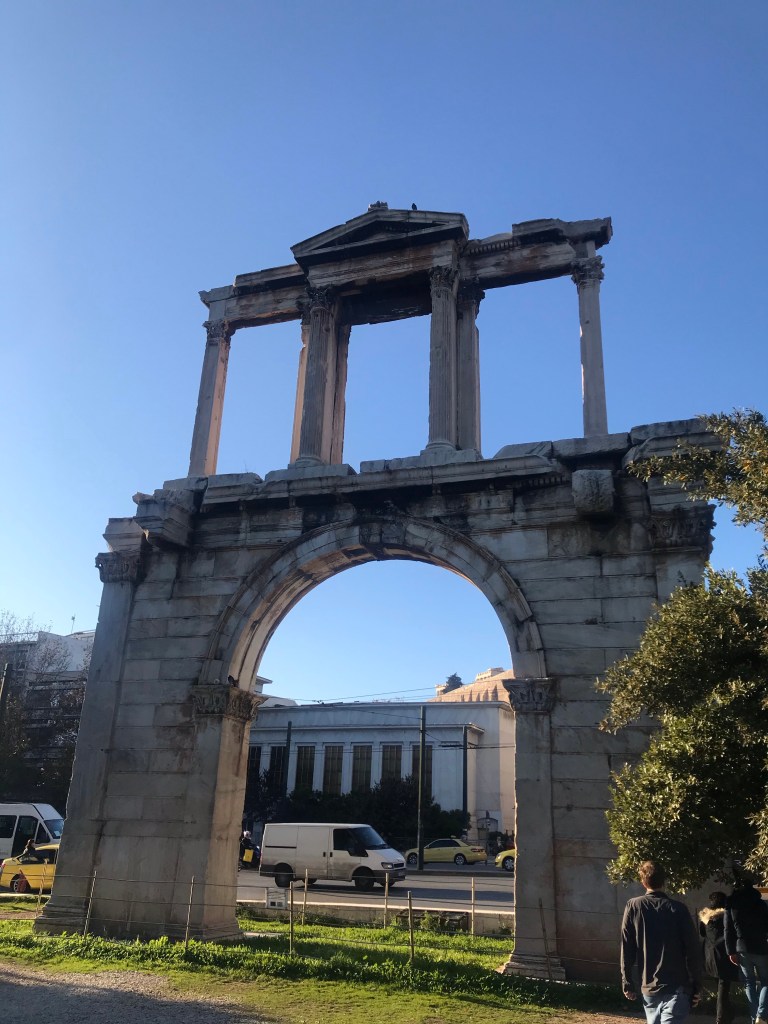
Draw and then describe in a long paragraph the Arch of Hadrian. Do you focus on different aspects of the Arch when you write about it than when you draw it?
Hadrian’s Arch is surprisingly small. It has height because of the smaller skinnier structure that seems to basically be placed on top. It is a square structure with an arch in the middle. It is built with bricks and the two pillars on both sides. The pillars on the side are square and they In the arch, the bottom half is a pillar that has an capital at the top and the top of the arch is made of bricks. Like I said before on the top it has a skinnier structure that has three sections. On the top of the middle section it has a triangle frieze on the top. Each of the pillars on the top also have capital. It seems to be well preserved, but it still looks like it is missing something more around the top.
I noticed that when I was describing the arch I was more focused on the smaller details that had to do with the structure and architecture of the building. When I was drawing the arch I found myself focusing on the general structure and shape and not the finer details.
Kerameikos
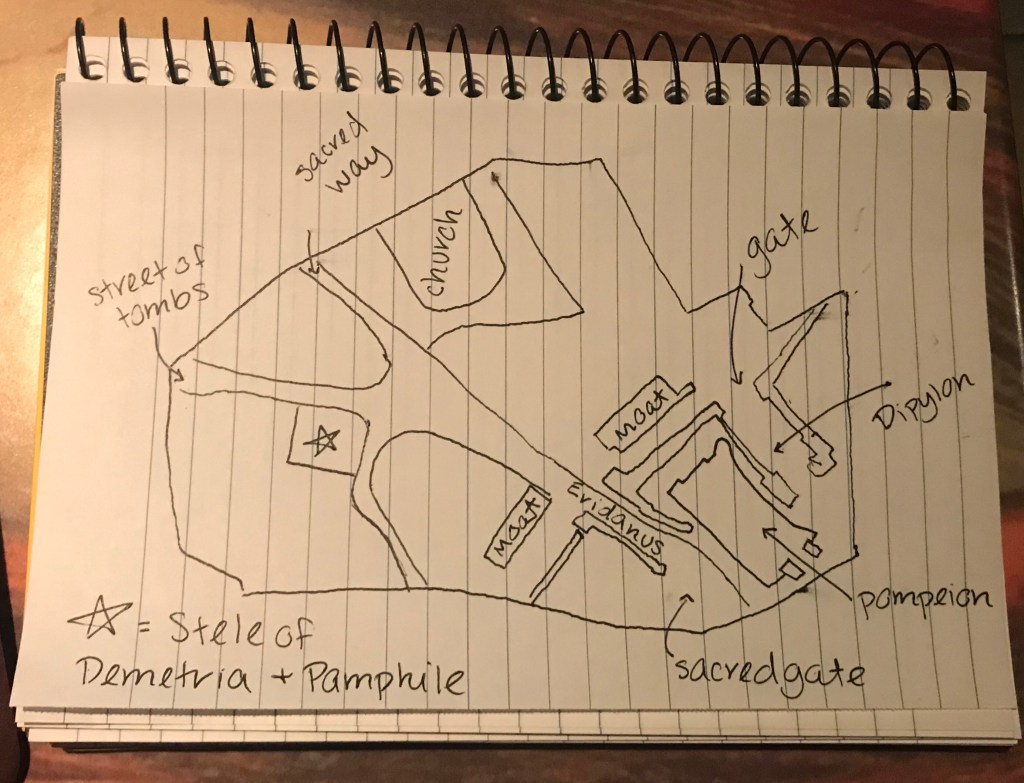
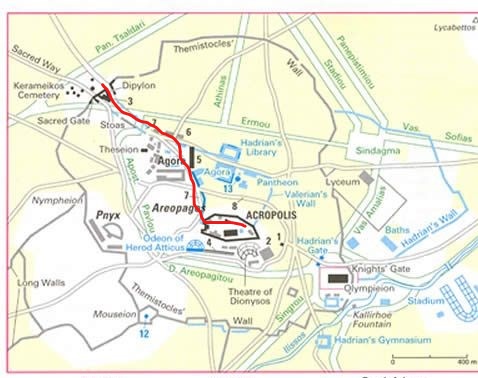
Draw a map of the Kerameikos district, paying particular attention to the roads and the gates into the city. Draw the route of the Panathenia procession to the Acropolis. Also mark where the Stele of Demetria and Pamphile was located. Make sure you visit the museum.
National Archaeological Museum:
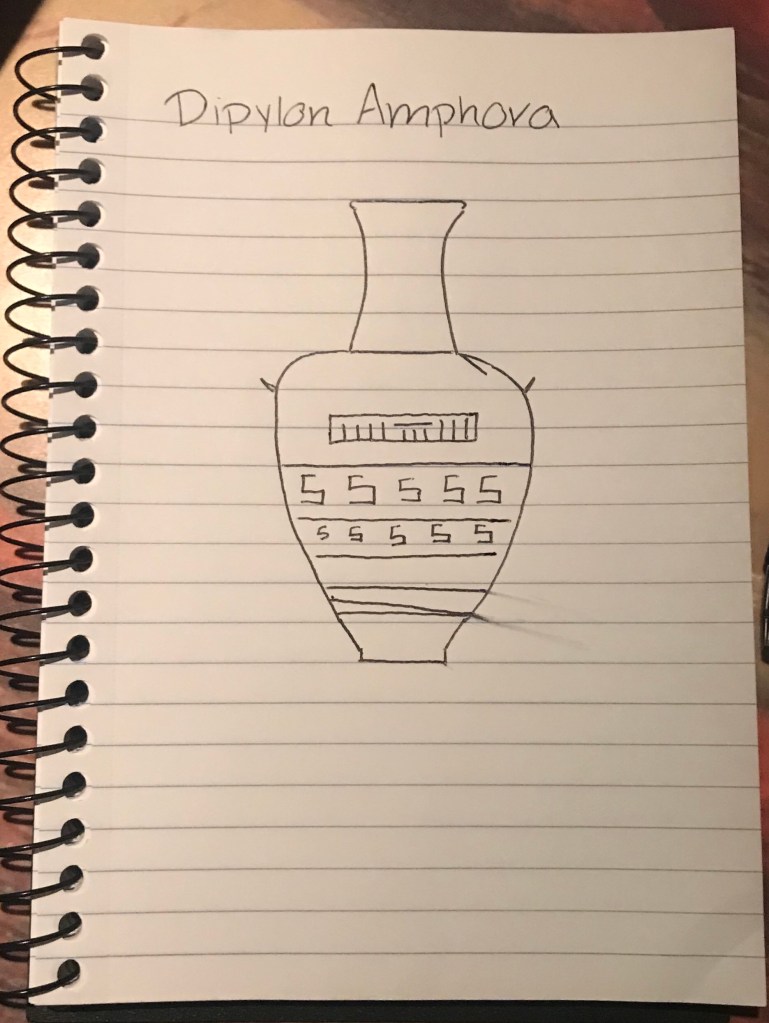
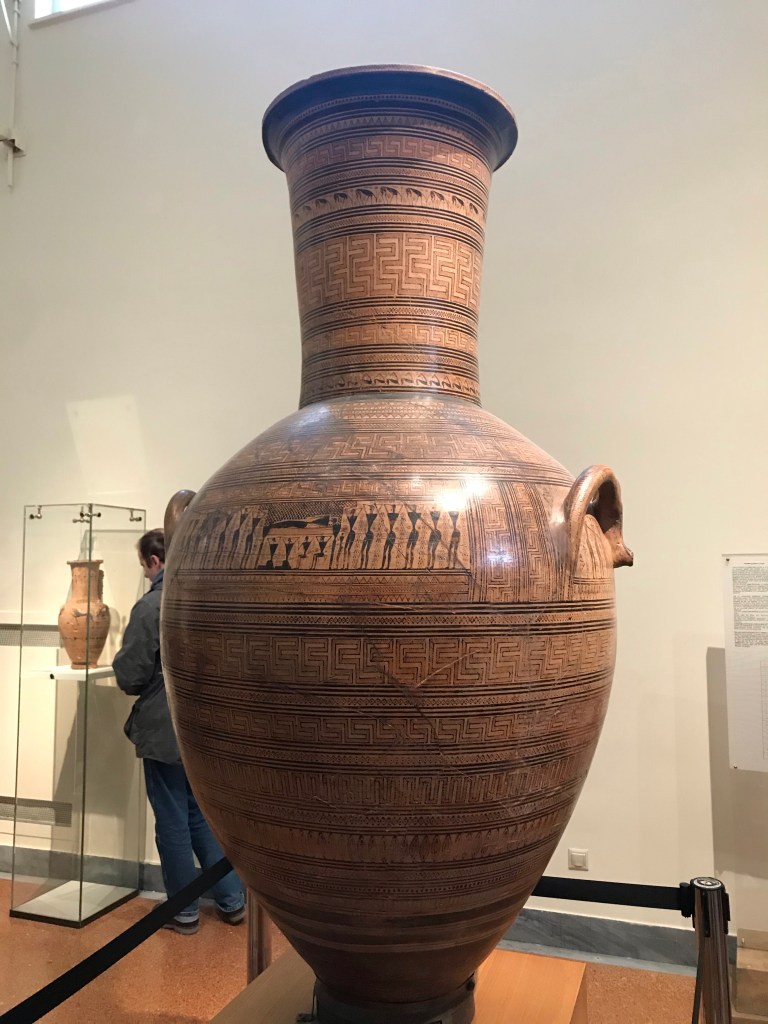
Draw a picture of the so-called Dipylon Amphora. Photograph the picture and post it. Write a clear description of it as well. When was it made? Where was it discovered? What is on it? What purpose did it serve?
The Monumental Attic grave-amphora is from the Kerameikos cemetery. It was made around 750 BC. Depicted on it is a funeral and mourning seen. You can see the corpse being help up and you can see the people around the corpse with their hands on their head, probably pulling their hair as a usual mourning gesture. This was made as a grave marker.
 Keep up with Veronica abroad