Assignment #11

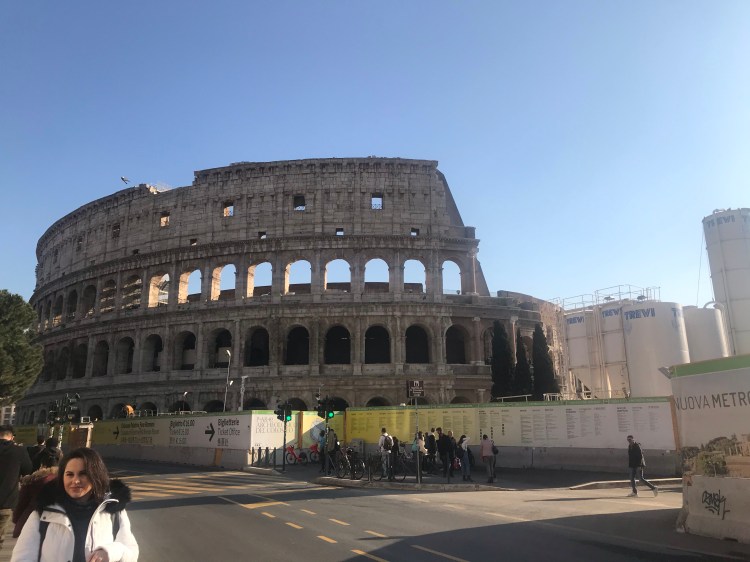
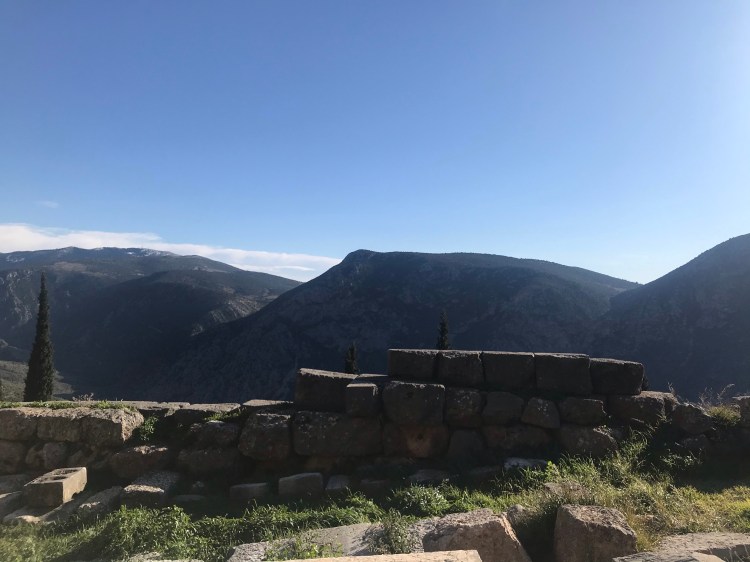
              The Colosseum is one of the most visited monuments in the world with about 5.11 million visitors every year (Story Map Tour n.d.). During our time in Rome I visited the Colosseum three separate times and there was always a crowd of people in front and a line to get into the building. There is no telling why this monument is so visited by people, after being abandoned for a number of years and its materials being used for other projects, such as the building of the Vatican, I’m not sure why this building gained so much popularity and is constantly attracting tourist groups. Everything about the Colosseum, from the building style, the reason it was built, and the person who built it, is very politically significant.

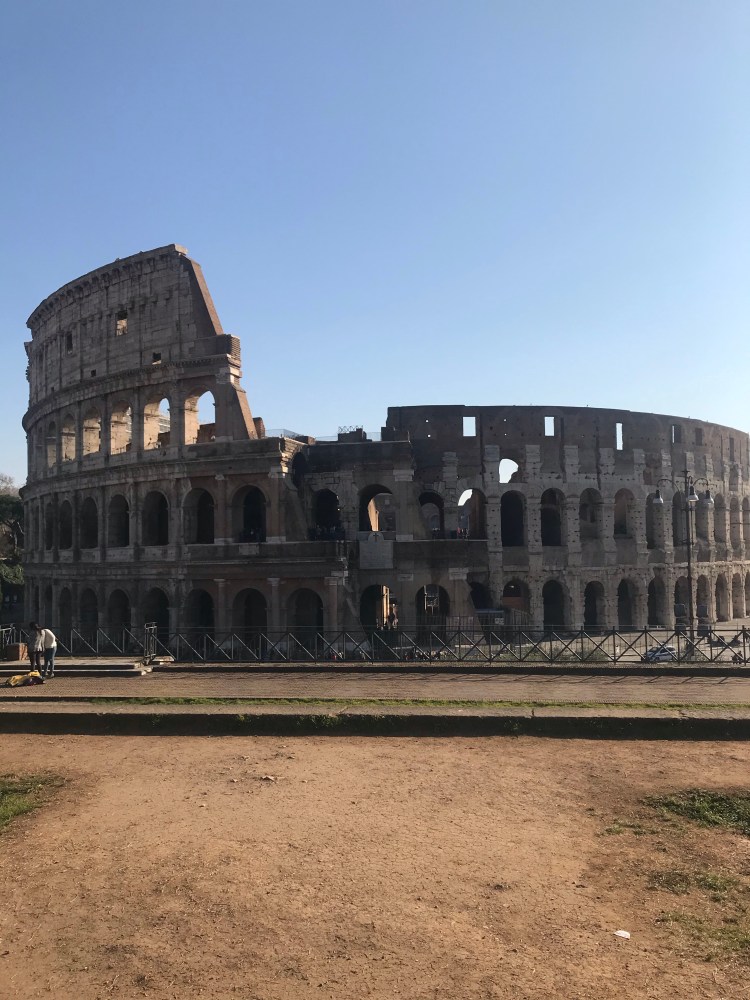
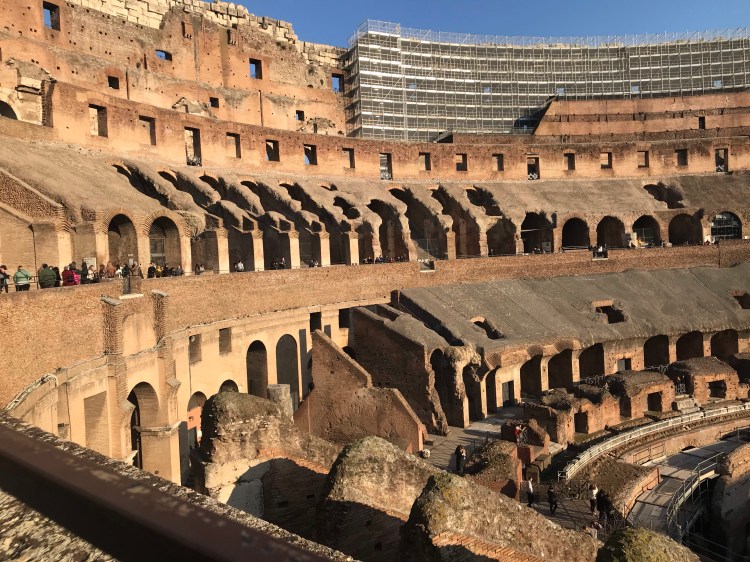
            The Colosseum is essentially an amphitheater, but it was given the nickname Colosseum after the statue of Colossus that used to be outside of the building. The Colosseum is built with three walls and arches going across the whole building. The arches are all numbered and corresponded to where the visitors would sit when coming to see the games. The structure of the building is all bricks and then it is covered in the material that we see. There are also various types of marble in the building including marble from Tunisia. Inside the Colosseum was filled with seats. Underneath the stage there was an elevator system called the hypogeum that was used to transport animals (Mueller 2011). These elevators were manually operated usually be slaves. The Colosseum also had a roofing system above that could be pulled out to cover from the sun or rain. The building has many inscription on it, the most important one in right in front of the entrance where the emperors who built the Colosseum left their mark (Feldman 2001). During some time, there was a church inside of the Colosseum, and today there still stands a cross where they perform certain extravagant ceremonies.

            The Colosseum was built from 70 AD to 80 AD. The construction was started by Emperor Vespasian and was later finished by his son Titus. Vespasian’s idea was to build a place where the people of the city could all come. This is especially reflected in how the games of the Colosseum were run. The games and events that happened here were all free for the people of the city to come see. The only account of these games that we have is in a book by Martial called Spectacles. Here Martial tells about what he saw in the first games of the Colosseum that lasted 100 day. Martial describes seeing many different and wild creates. It is believed that among the animals at the games there were giraffes and elephants. Much of what happened at these games were fights. It was mostly gladiator fights, or prisoners who were taken and were forced to fight an animal in front of an audience until the emperor decided that they had done all their time. The games at the Colosseum peaked around the 18th century, after this the games started happening less frequently and eventually stopped altogether. After this the pieces of the Colosseum were used for various other projects, and that is why we have the strange shape of the Colosseum that we have today.

            Almost everything about the games and event the building of the Colosseum was political in some way. The emperors sat in a distinct part of the stadium and they entered through a special door (The Colosseum 1884). Emperors were of high importance in the Roman empire Vespasian used the building of the Colosseum to try and show this off and eventually Titus followed through on that goal (Elkins 2014). They used the games at the Colosseum to show off the extent of the power the Roman Empire had. By having giraffes and elephants, animals that they transported from the farthest parts of the empire, they showed off to the citizens the power that the empire had. The use of marble from all over the world was also a show off power for the Roman empire. In the same way they used the animals, which the marble from Tunisia they were able to show off how big the roman empire really was. But there is a darker side to the games and the events that happened at the Colosseum. They used a lot of violence at these games, they made prisoners fight with animals until they fulfilled their sentence and were released. Also, by making all the people in the empire come watch prisoners fight to the death, they were keeping people in control. The emperor was able to ensure that no other citizens would do anything bad, because they didn’t want to be showed off in an animal fight to the entire city.

            This extreme use of violence in the city reflects the arguments of Steven Johnston in American Dionysia. Johnston argues that democracy and violence must live hand in hand. He argues that in modern America we are living in democratic times which in turn means that we are living in violent times. I push back on this argument and I believe that Johnston not considering that the violence perpetrated today may be a response to the lack of democracy. I argue that the violence that is in our society today is in connection to wanting to control any undemocratic measures that might occur. I believe that this is the same idea that Emperor Titus is using against the Roman Empire at this time. Titus is using the violent games at the Colosseum to keep the other people in the city in check. He is controlling anything that might be undemocratic by using violence to convince people to not disturb the democracy. Seeing that the Colosseum in its building and in its extravagant use was inherently political, it would not be a far stretch to consider that the violence perpetrated here was used to control democracy
Assignment #8

Michel Serres, Statues. Bloomsbury.

1. What does Serres compare to the 1986 explosion of the rocket Challenger?

He is comparing these accidents and explosions to the human sacrifices of the Ancients. PG. 2-5.

2. What do the hideous statue and its inhuman form of worship have to do with us?

Because if we simply ignore than, then we are risking being no different than the Ancients were in terms of sacrifice. PG 14.
3. What word does ‘victim’ share a lineage with?

“Vicar” or “vicaious” which means substitute or replacement. PG. 10.

4. Which comes first, according to Serres, language or statues? Where do our Ideas come from?

States came before languages. Our ideas come to us like idols or ghosts from the past and out language itself admits that. PG. 32-33.

5. How does Serres interpret the name “Peter”?

He interprets the name “Peter” to be related to statues and the creation of life into sign. PG 42.

6. What happened to gyges?

Gyges dies and went into a place where she could see a bronze statue of a horse. H ewas the excluded third that would still more around in his tomb. PG 83.

7. Who painted four Mary Magdalenes? How does Serres interpret them? Respond to Serres’s points with a claim about Caravaggio’s Repentant Magdalen in the Galleria Doria Pamphili.

La Tour painted four Mary Magdalenes. Caravaggio’s Repentant Magdalen is the same as the three that La Tour painted which have the visit on the left. Almost every detail that Serres describes you see in Caravaggio’s.

Freud, “A Disturbance of Memory on the Acropolis.”

8. What does Freud say has been the aim of his ‘scientific work’ in a Disturbance of Memory?

Freud says that the aim of his scientific work was to shine light on unusual behaviors of the mind and to indicate where those might come from. PG 239.

9. What experience of Freud have upon seeing the Acropolis of Athens?

Fred claims that he thought t himself that the place actually exists like he learned in school. PG 241.

10. What explains his behavior in Trieste?

Freud claims the his behavior in Trieste is explained by someone’s inability to believe something that seems to good to be true, like winning a prize. This could also be caused by someone’s refusal to be happy. People do not think they are worth the happiness that this has brought into their life. PG 242.

11. Two general characteristics of the phenomena of derealization:

The first characteristic is that it is trying to keep something away from the ego. The second is that they rely on your memories and past situations which were distressing. PG 245-6.

12. What does Freud conclude interfered with he and his brother’s enjoyment of the journey to Athens?

Freud concludes that it is this feeling of guilt that they had in Trieste that began to interfere with their enjoyment of the trip. PG 247.

Civilization and its Discontents. Pp. 11- 20. https://www.stephenhicks.org/wp-content/uploads/2015/10/FreudS-CIVILIZATION-AND-ITS-DISCONTENTS-text-final.pdf

13. What does he conclude when Freud suggests, “now let us, by a flight of imagination, suppose that Rome is not a human habitation but a psychical entity with a similarly long and copious past”?

“The Moses of Michelangelo.”

14. In Freud’s option what is it that grips us so powerfully in great works of art?

Freud says that it is the artist’s intention and his ability to convey his thoughts and messages to us that grips us in powerful works of art. And his ability to get us to understand his intentions. PG. 212.

15. Why does he call this statue ‘inscrutable’?

Freud calls the statue ‘inscrutable’ when comparing it to Hamlet. Much like this play, the statue could have many different interpretations on what the intentions behind it might have been. PG. 213.

16. How does he interpret the state of Moses in the statue?

Freud describes the statue to appear to be anger and in fear. He says the statue is in a frozen position after he has overcome his fury and will remain in his pained state. PG 229-30. More concisely Freud agrees with the words of Thode, who says that the statue is in between the emotions of wrath, pain, and contempt. PG. 214.

Assignment #10

Interview two people in Rome about the Victorio Emanuele II Monumento (Altare Delle Patria). Ask them if they like it. Would they change it? Why was it made? What would they replace it with? Write 500 words describing the results of your interview. Organize this material according to a clear thesis.

When we went to the Victorio Emanuele II Monument there was a relative amount of people. After talking to some people and asking questions, we realized that mostly everyone was tourists. The first two people that we approached said that they would not be able to answer our questions, because they did not know anything about the monument and they felt that they could not really say anything about it. The next two people we approached decided to answer our questions.

They both said that they liked the monument, they said they could not think of anything that they would change about the monument. Both people said they had read somewhere why it was made, but in that moment they couldn’t remember why it was made. And lastly they said they could not think of anything they would want to replace it with. So as a whole tourists were doing the usual thing and they did not seem to care too much what they were seeing, they were just out seeing the sights and enjoying the nice day.

Opposite to this when I asked the second group what they thought of the Colosseum they had a much better reaction. Maybe if I would have asked what they thought of the Flavian Amphitheatre they would have had to think about it a little more. Now this is not a hate on tourists, I might be the most tourist person out there. I love seeing sights just to see them and I don’t really enjoy sitting there reading plaques that explain what a monument is. This just goes to show that tourism is a major industy in Italy, they have these monuments and keep things preserved to try and keep this industry alive, and from what I saw it probably isn’t going to die anytime soon.

A few days later I met up with my aunt and uncle ho live in Italy. My uncle is super Italian and loves his Italian heritage and sharing it with his kids, although him and his kids were born in Venezuela. One of the first things he asked me is if I had seen the Victorio Emanuele II Monument. When I went with him to go visit it, he told me how great he thinks the monument is. He thinks the view from the top is amazing. I even asked him if he thought that the monument was too big or kind off misplaced, and he said no he thought it fit great there.

To my uncle the monument actually means something, he knows who its dedicated to and he feels his nationality tied closely to it. When I asked him about the Colosseum he had the same kind of reaction. He felt his nationality tied closely to it.

I am in no way saying that tourism is a bad thing, but here is a great example of what monuments can mean to two different groups of people. Now my uncle wasn’t exactly educated on what Victorio Emanuele II did, but he knew who it was and he was able to appreciate seeing the monument more than a regular tourist might be able to.

Assignment #9

Any five of the 13 Obelisks

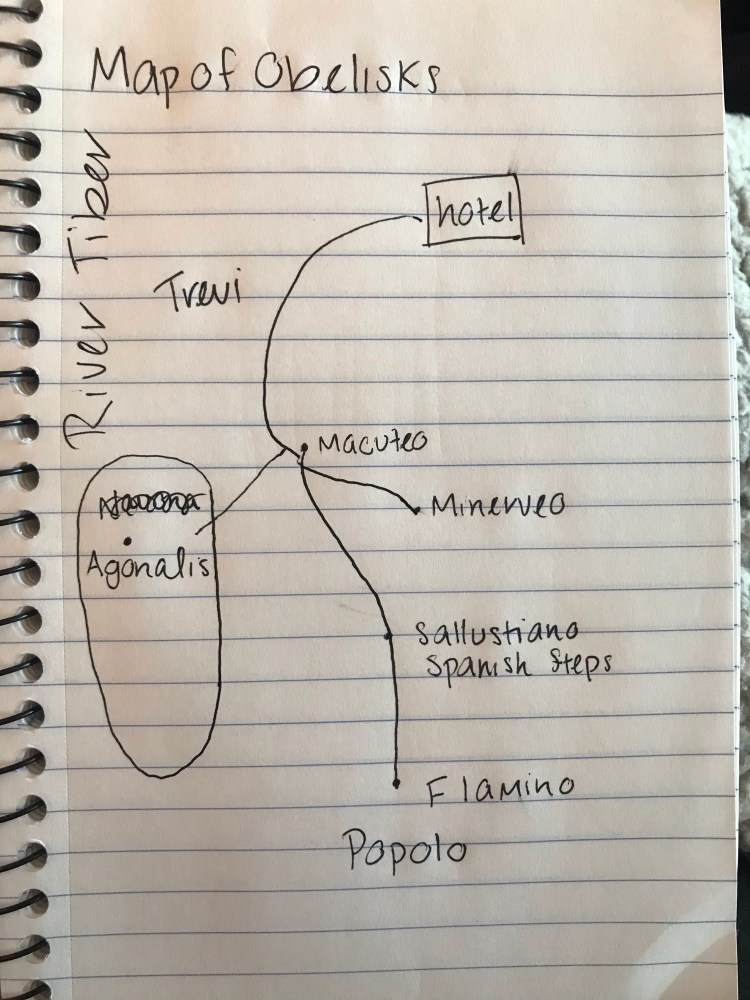
Describe their setting and provide information of where each one came from, who brought it here, and when it was placed where it is now. Take a photo for your blog. Draw a map (you can use google if you want—or just a rough hand drawing) orienting them to each other and a few landmarks (monuments, hotel, bars, etc.).

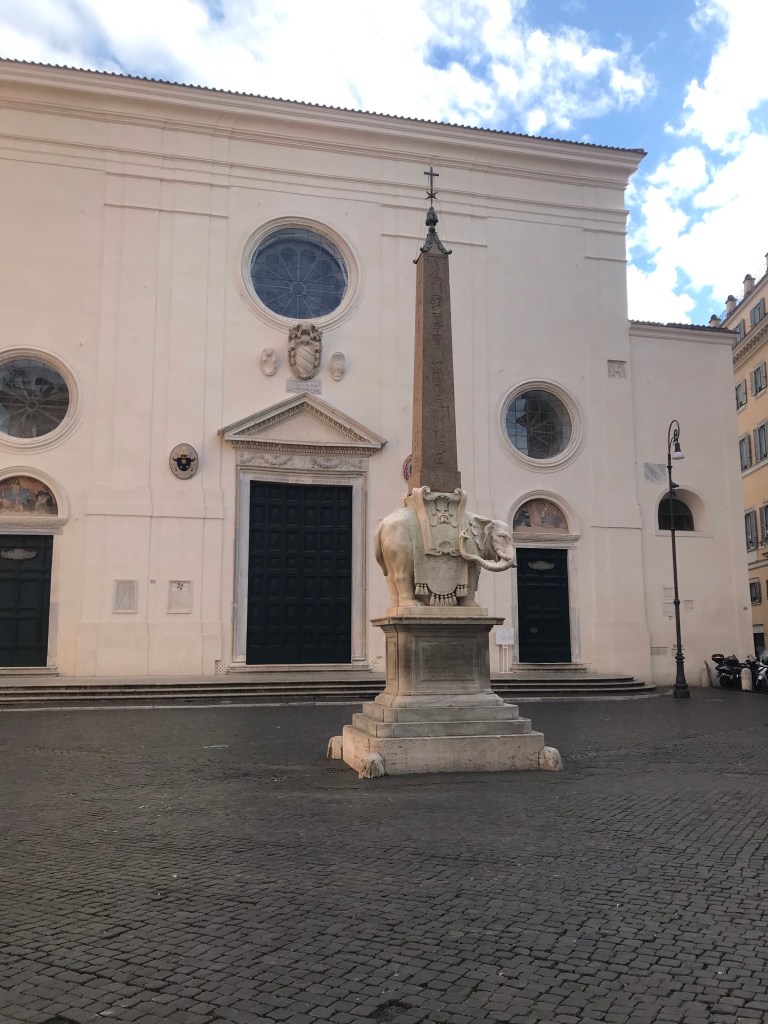
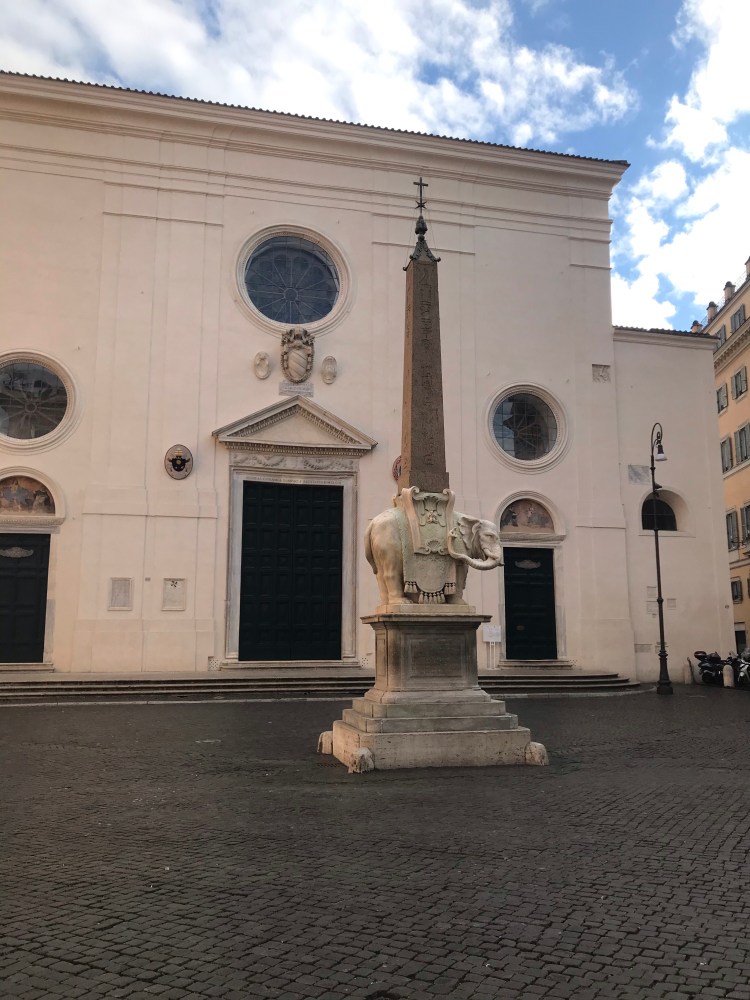
The Minerveo was brought from the ancient Egyptian town of Sais. It was brought by Diocletian and erected where it is now standing in 1667. It was placed on top of the elephant that was made by Bernini. This was my favorite obelisk that we saw. It is currently in front of the Santa Maria Sopra Minerva.

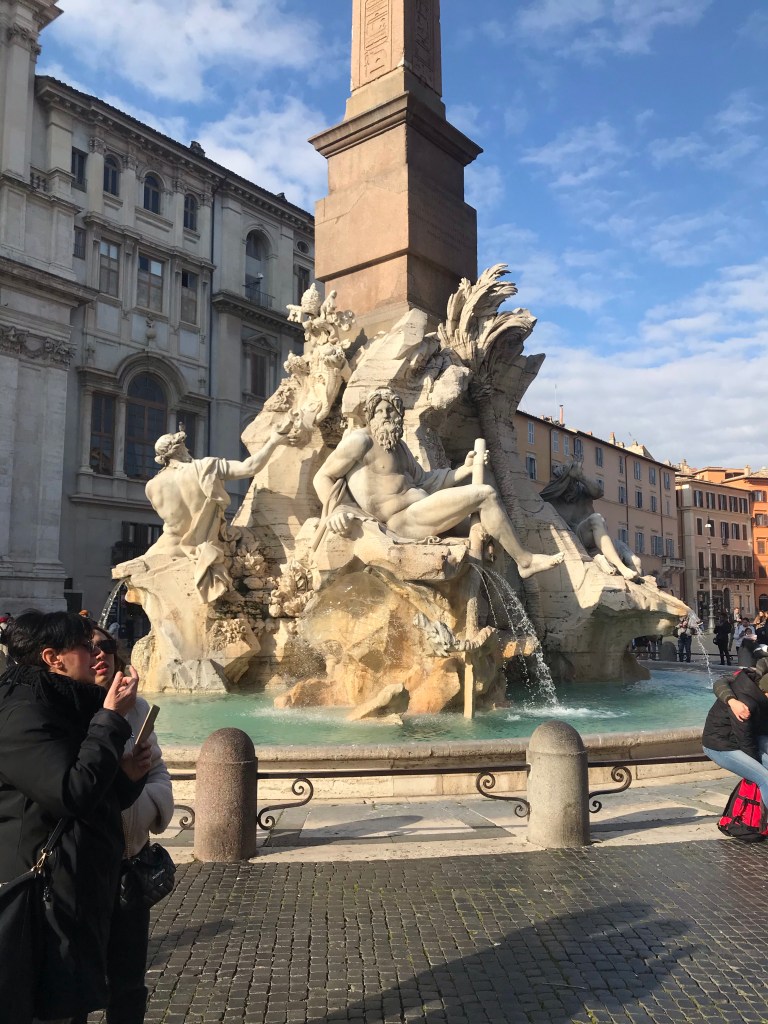
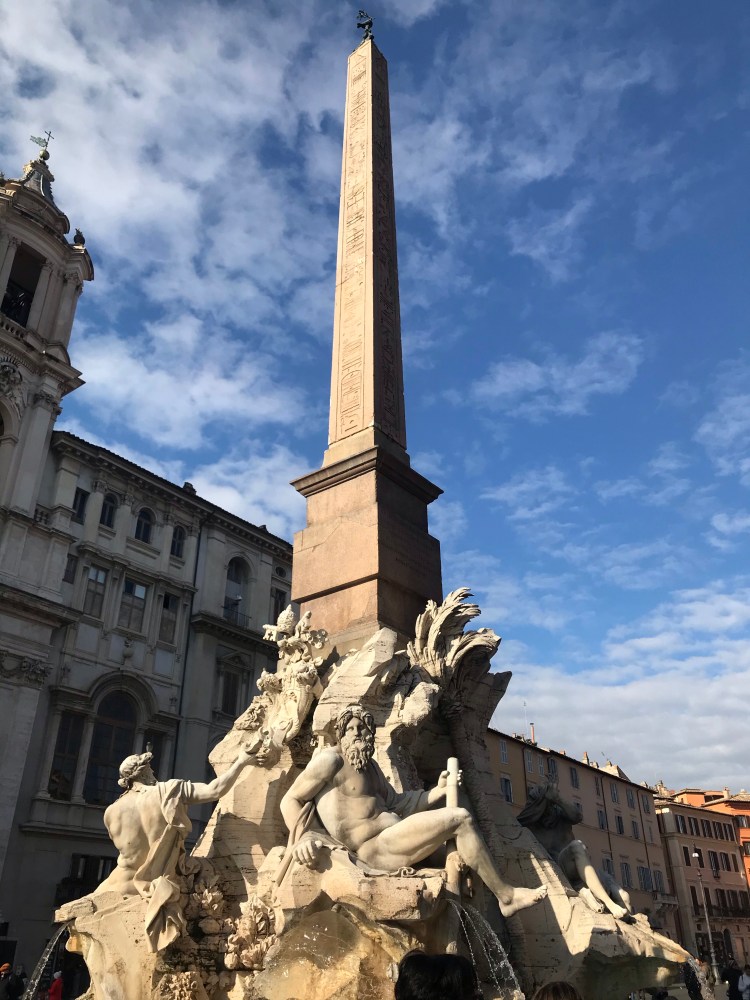
The Agonalis obelisk is placed in the Piazza Navona is erected on top of the Fontana dei Quattro Fiumi. The obelisk was moved here by Bernini in 1651 after having been at the Circus of Maxentius and at the Temple of Serapis before that. This obelisk was commissioned by the Emperor Domitian as an imitation of the Egyptian ones.

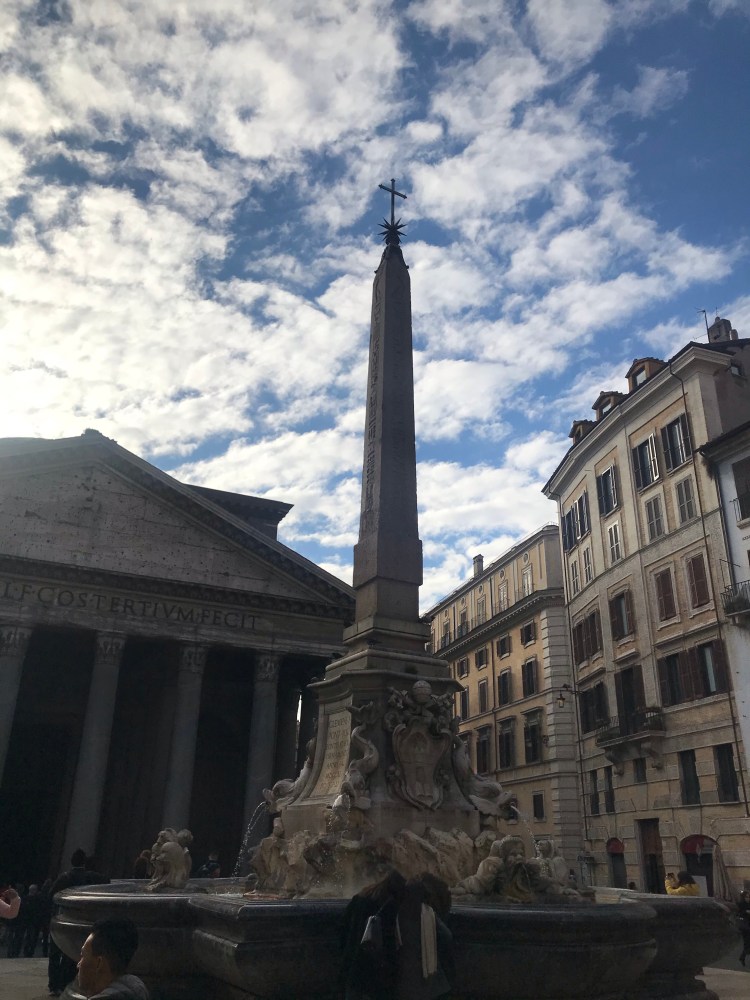
The Macuteo currently sits in front of the Pantheon on top of a fountain. This was originally one of a pair at the Temple of Ra in Heliopolis, a major city of ancient Egypt. It was moved to where it is now by Pope Clement XI in 1711.

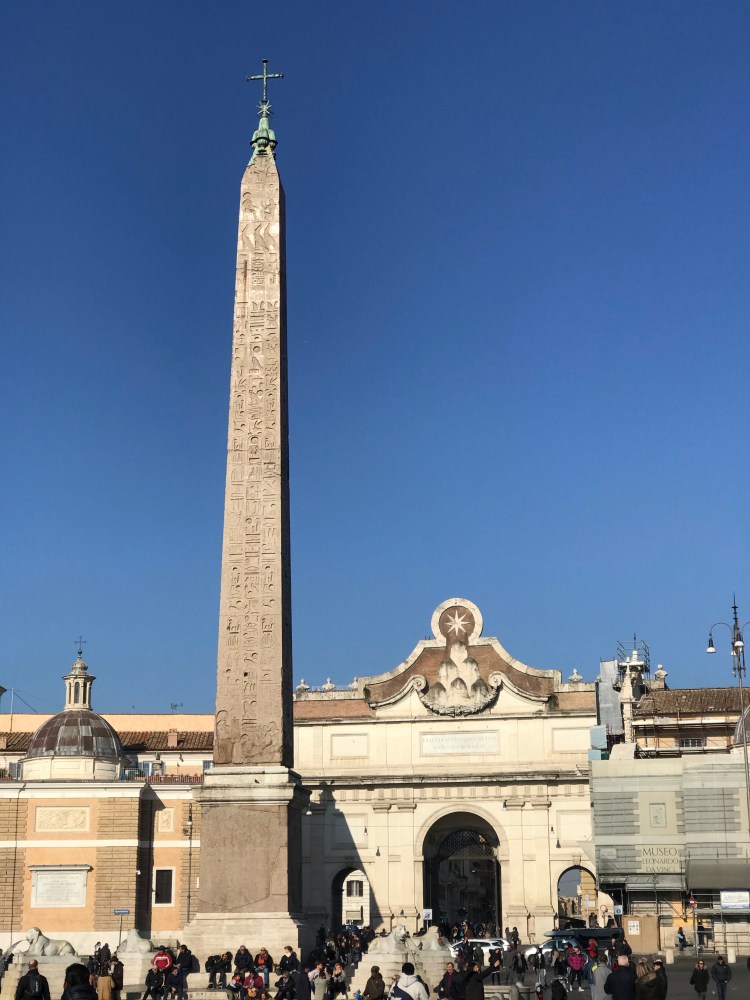
The Flaminio was brought by Augustus in 10 BC. It was originally from the ancient Egyptian city of Heliopolis. It now sits in the Piazza del Popolo after being placed there in 1589.

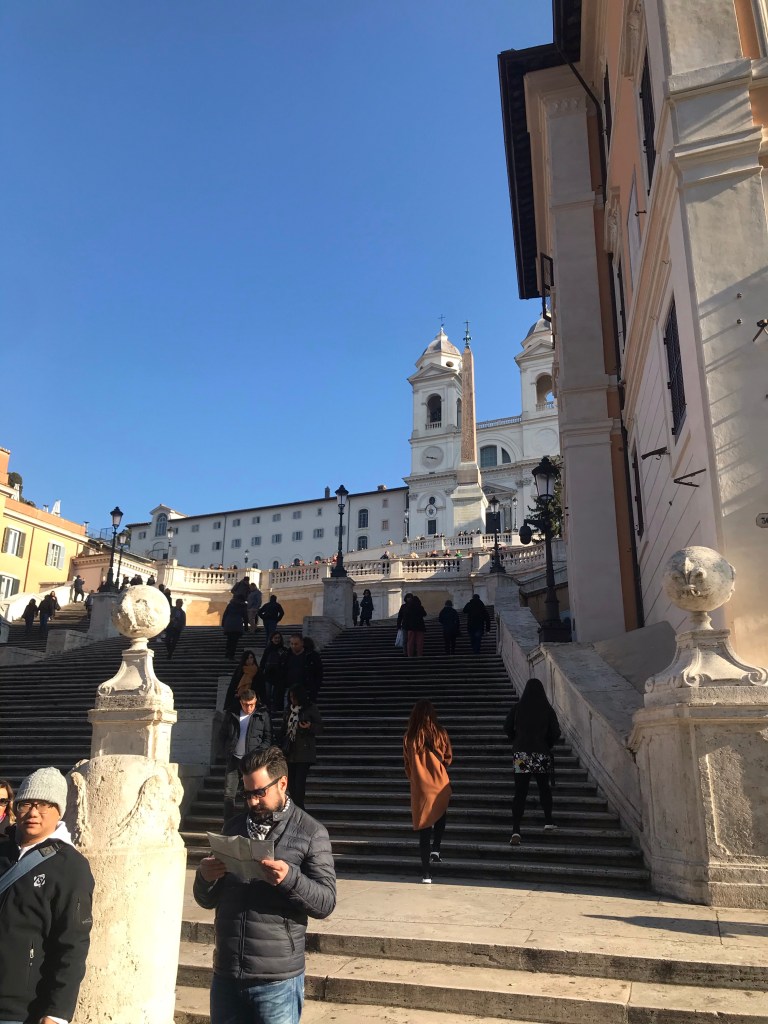
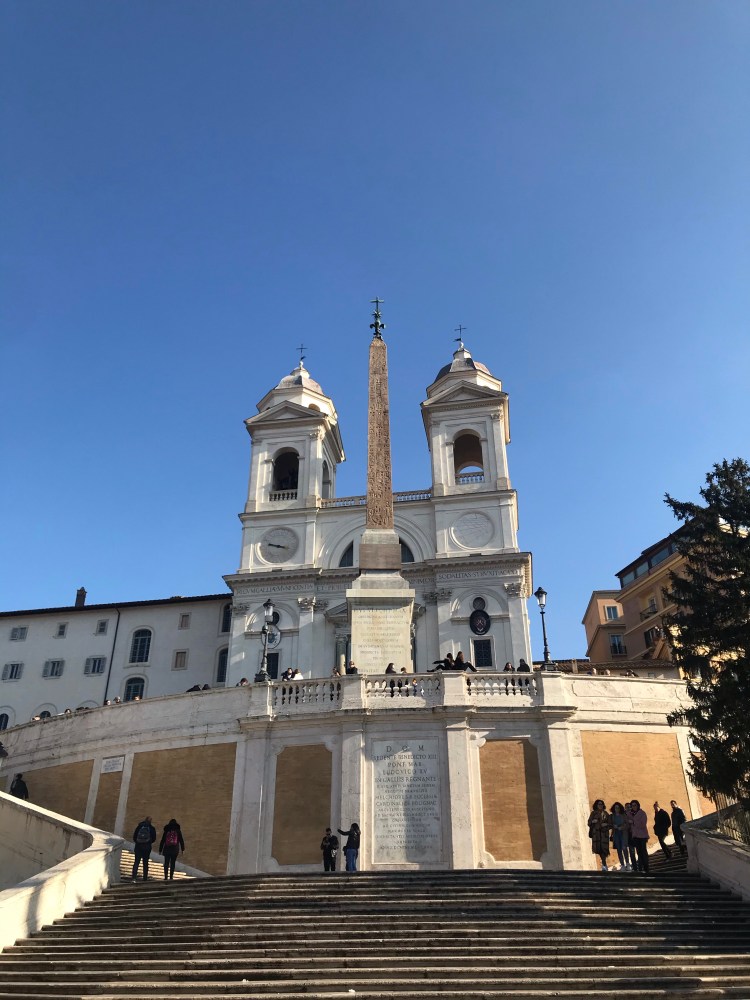
The Sallustiano is a copy of the Flaminio that sits in the Piazza del Popolo. It was found and placed near the Spanish Steps in 1734. It was found by Ludovisi.

Pantheon

Video yourself pacing the number of steps from the door to the center. How many ‘steps’ tall is the oculus of the dome?

It took me 72 steps to walk from the center of the building to the door. Seeing that this would be considered the radius of the sphere, 144 steps would be the radius of the sphere. This means that the dome is 144 steps tall.

Find and photograph any six Caravaggio paintings in Rome:

Briefly describe the content of each paintings. Also, what is the most brightly painted object in each of the paintings?  Use one (or more) of the Caravaggio paintings that you discovered in Rome to respond to Michael Fried’s account of absorption (in the Soundcloud lecture). Set out Fried’s account and then how the painting does or does not fit his account. Write 500 words.

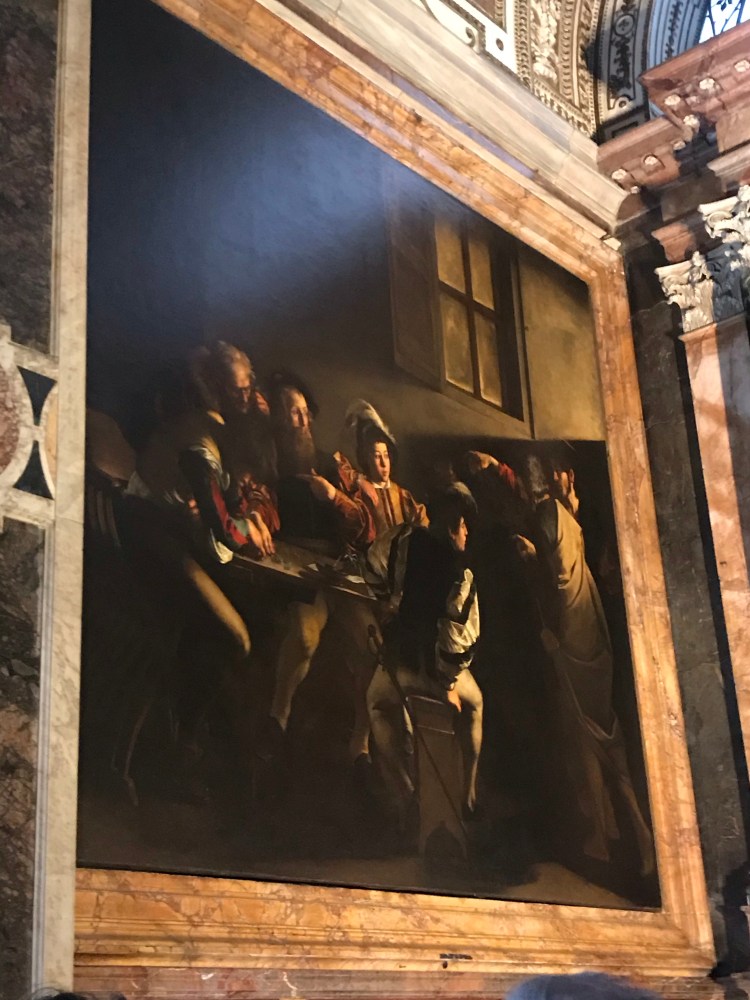
The Calling of St Matthew. This painting by Caravaggio is showing the moment when Jesus is asking Matthew to follow him and inspiring him to become a a disciple. The most brightly lit subject in this painting in the young boy facing us sitting at the end of the table, he is sitting closest to where the light seems to be coming from, maybe a window beyond the right hand side of the painting. There has been recent debate over who might be Matthew in this painting, the bearded man or the boy sitting all the way to the left.

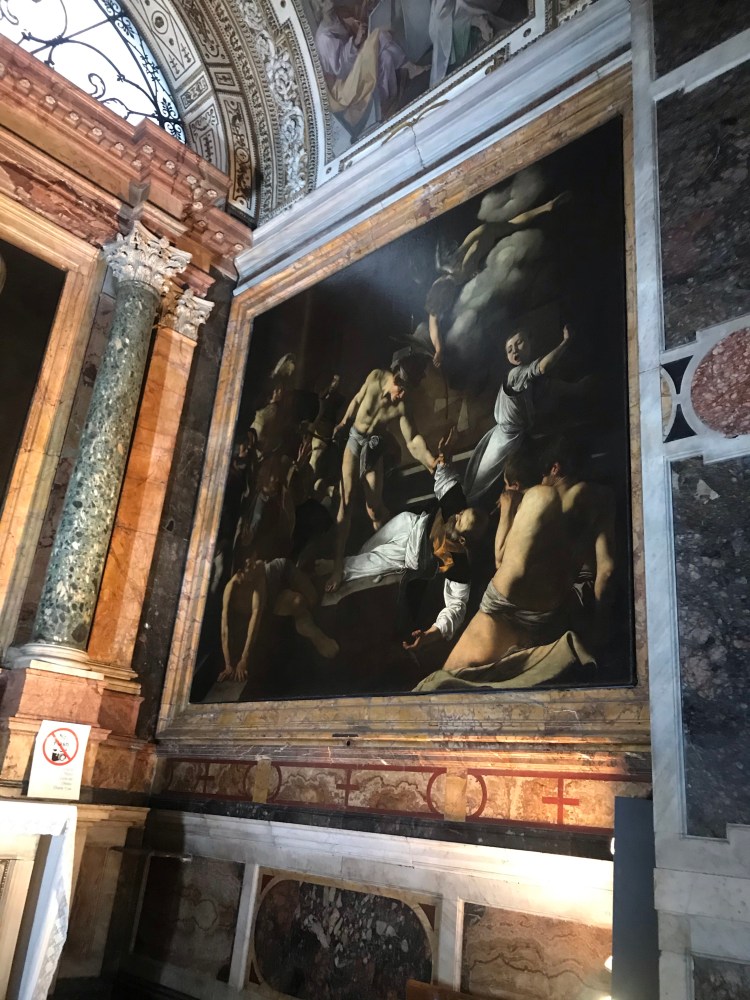
The Martyrdom of Saint Matthew. This painting by Caravaggio is showing the killing of St. Matthew by the king of Ethiopia while celebrating mass. It is showing the most dramatic moment when the saint is about to be killed by a solider of the king. The background of the story is that the king had been highly criticized by Matthew because he was lusting over his niece who was a nun and bride of Christ and should not be lusted over. The most brightly lit in this painting is the solider who is about to kill Matthew.

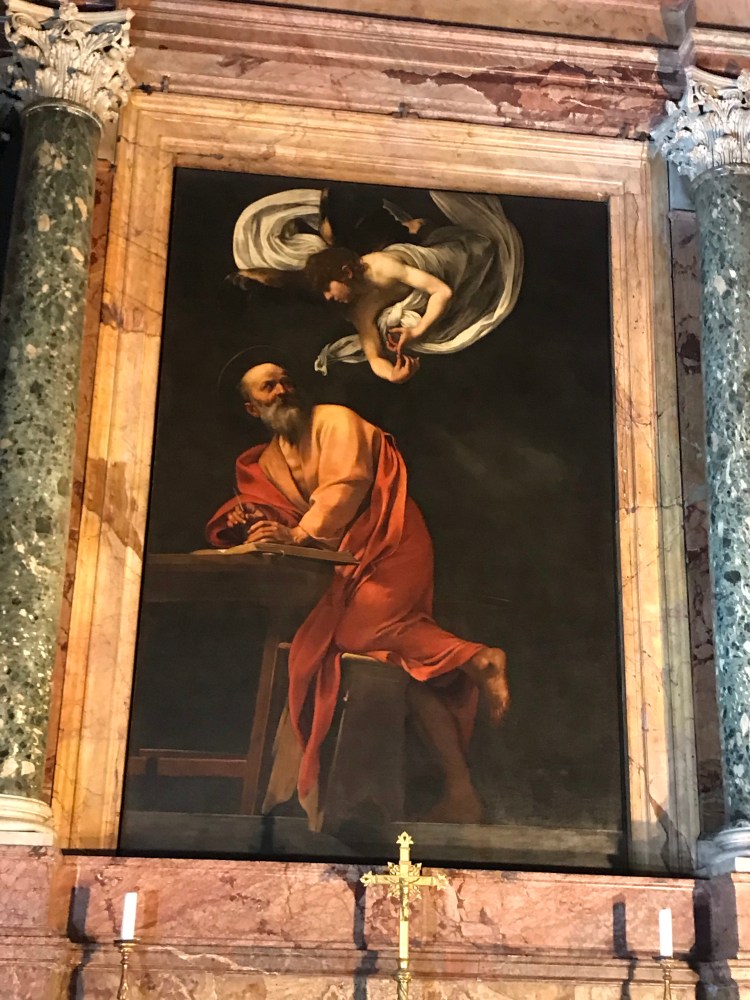
Inspiration of Saint Matthew. This painting by Caravaggio is portraying an angel as a messenger coming to the saint, and it appears that he is telling him a list of things that he needs to do. By having the angel come from above, as opposed to being next to the saint as in the first version of this painting, it appears to be a divine intervention and not just a casual interaction. Saint Matthew is the most brightly lit in this painting.

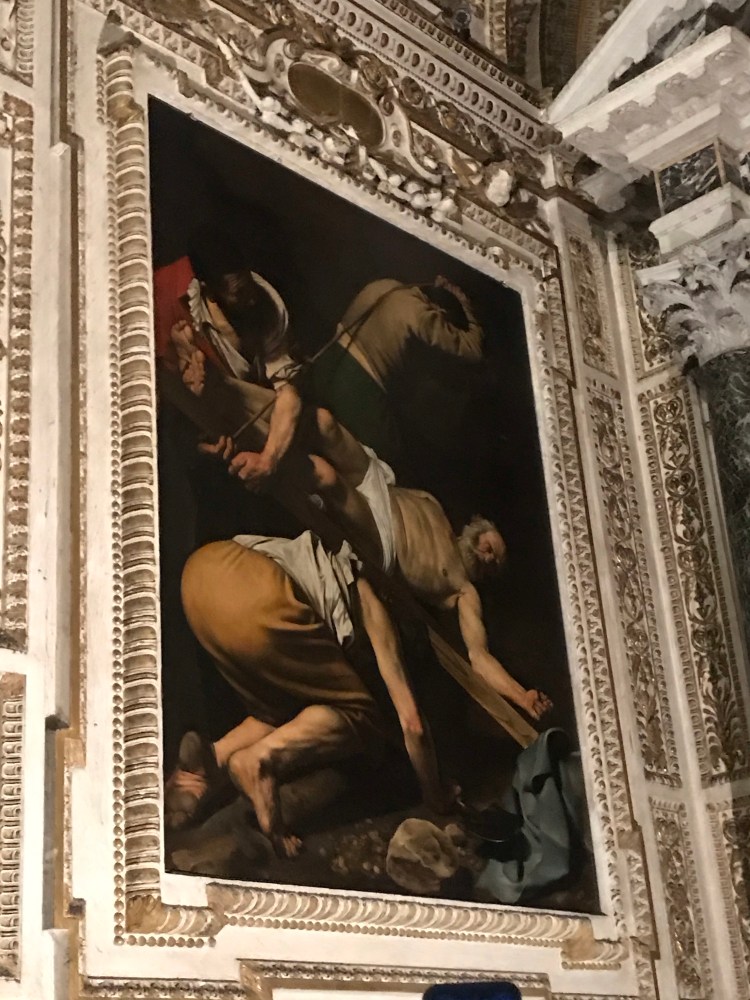
Crucifixion of Saint Peter. This painting by Caravaggio is depicting the killing of Saint Peter. According to the story Peter wanted to be crucified upside down because he didn’t believe that he was worth to die in the same way that Jesus Christ did. In the paining you can see the three men trying to upright to cross while Peters lays there already nailed in. Saint Peter is the most brightly lit object in this painting.

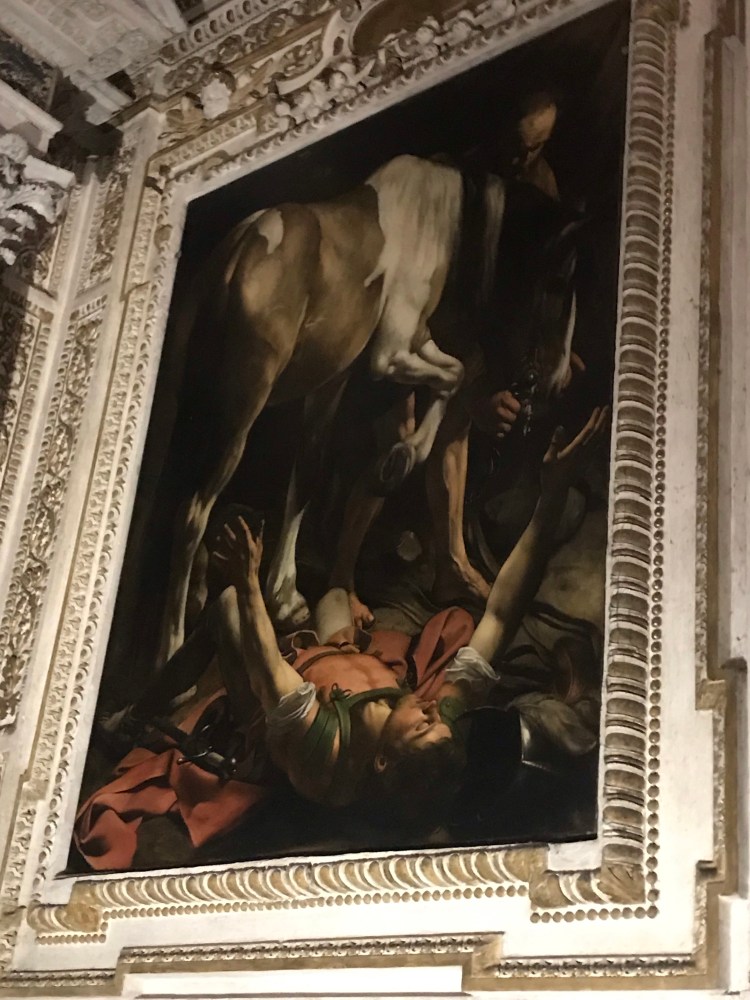
The Conversion on the Way to Damascus. This painting by Caravaggio shows the moment when Paul saw the light of Jesus. The story says that Paul was a prosecutor of Christians and on his way to Damascus he saw the light of Jesus asking him why he prosecuted the people who follow him. This is the moment when Paul fell from his horse because of the blinding light. The most brightly lit in this painting is Saint Paul.

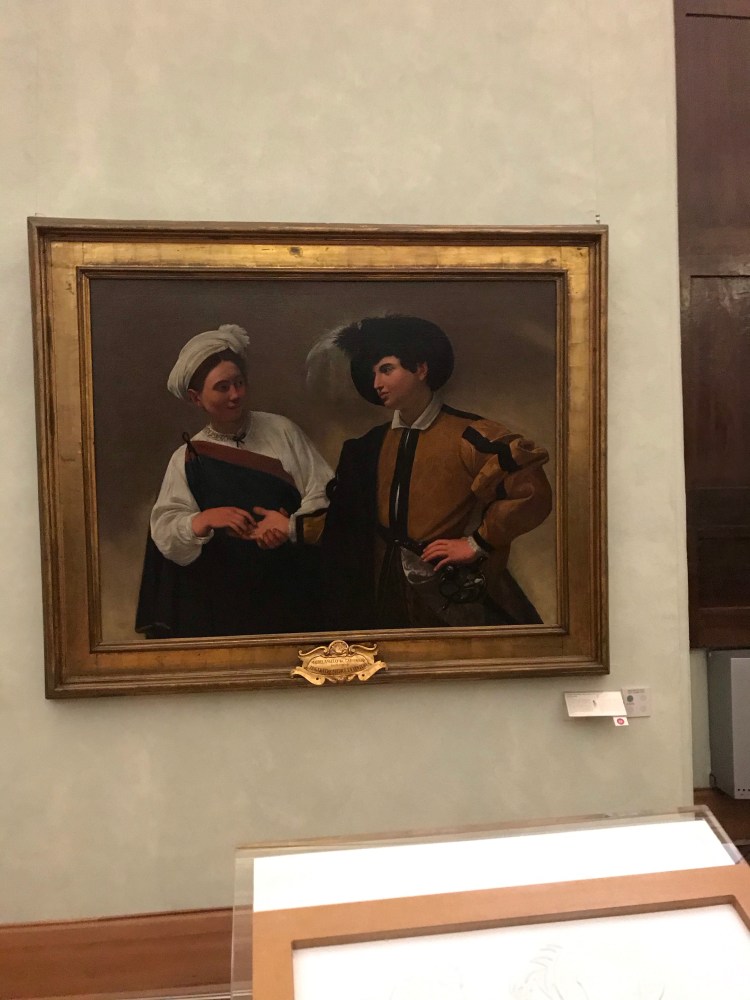
The Fortune Teller. This is the first version of the painting by Caravaggio. The painting shows a well dressed man who seems to be of a high class holding hands with a young girl who seems to be of a lower class. The boy is looking into the girls eyes and he doesn’t notice that she is taking the ring off of his finger. Looking at both versions on the internet, I like this version better than the second one. In this painting the young boy is brighter lit than the young girl.

Michael Fried devolves his account of absorption by using mainly two pf the paintings that are in the Church of San Luigi dei Francesi in Rome. He uses The Martyrdom of Saint Matthew and The Calling of Saint Matthew. With both of these painting Fried describes how Caravaggio is able to portray the subjects f the painting of being on there for a moment. He describes how the light in The Calling of Saint Matthew seems to come from a window outside of the painting. He also shows how in The Calling of Saint Matthew you see that Matthew and Jesus are only there for a moment, they will soon move on to something else. Caravaggio has shown the subjects essentially only in one moment, meaning us as the viewers only see the objects in that moment and they will quickly move on to the next thing. Fried also uses The Martyrdom of Saint Matthew to further the idea of absorption. We, as the viewer, are able to see for a prolonged period only a moment in time. Here Caravaggio is showing the execution of Matthew, Fried describes how there are subjects in the paintings going every which way. Some subjects in the painting have their back faced to us and they are fleeing the seen, others are facing us also feeling the scene.

The Fortune Teller was my favorite Caravaggio that we saw in Rome. Most likely it was my favorite because it was one of the few that we saw that did not depict a religious story, and I am not very religious myself. I think this Caravaggio is a perfect example of absorption, if you accept the story that is told along with the painting. If you are not quite convinced that the gypsy, or young girl, is taking the ring of the boy then you are simply seeing an interaction of the two and it might not be as good of an example of absorption. If you accept that the gypsy is in fact taking the ring from the young boy, then we have a perfect example of absorption. Caravaggio is able to portray the two in a single moment, the gypsy is taking his ring and the boy is taken by her beauty and has not noticed that she is stealing from him. We can assume that past this moment in the painting the boy noticed that she had taken his ring, and the gypsy quickly ran away before she could catch him. We also see that there is something happening outside of this painting. There is a source of light coming from the right hand side of the painting, which you can see because the young boy is brightly lit and he seems to be casting a small shadow on the young girl. Beyond the stealing of the ring, I also think their facials expressions show perfect absorption. The boy in this single moment is taken aback by the beauty of the girl and he seems to be smiling at her, and the young girl is looking him in the eye distracting him long enough to take his ring.

Find where Julius Caesar was assassinated. Video yourself at the location reciting from Cicero’s Philippicae:

“For what greater exploit (I call you to witness, O august Jupiter!) was ever achieved not only in this city, but in all the earth? What more glorious action was ever done? What deed was ever more deservedly recommended to the everlasting recollection of men? Do you, then, shut me up with the other leaders in the partnership in this design, as in the Trojan horse? I have no objection; I even thank you for doing so, with whatever intent you do it. [33] For the deed is so great a one, that I can not compare the unpopularity which you wish to excite against me on account of it, with its real glory.”

September 44 BC — Philippicae (The Fourteen Orations Against Marcus Antonius), Cicero. “Delphi Complete Works of Cicero.” Apple Books.

Design a memorial to Brutus and Cassius for the location of the tyrannicide against Caesar. Keep mind the Athenian monuments for Harmodius and Aristogiton, the very first political statues.

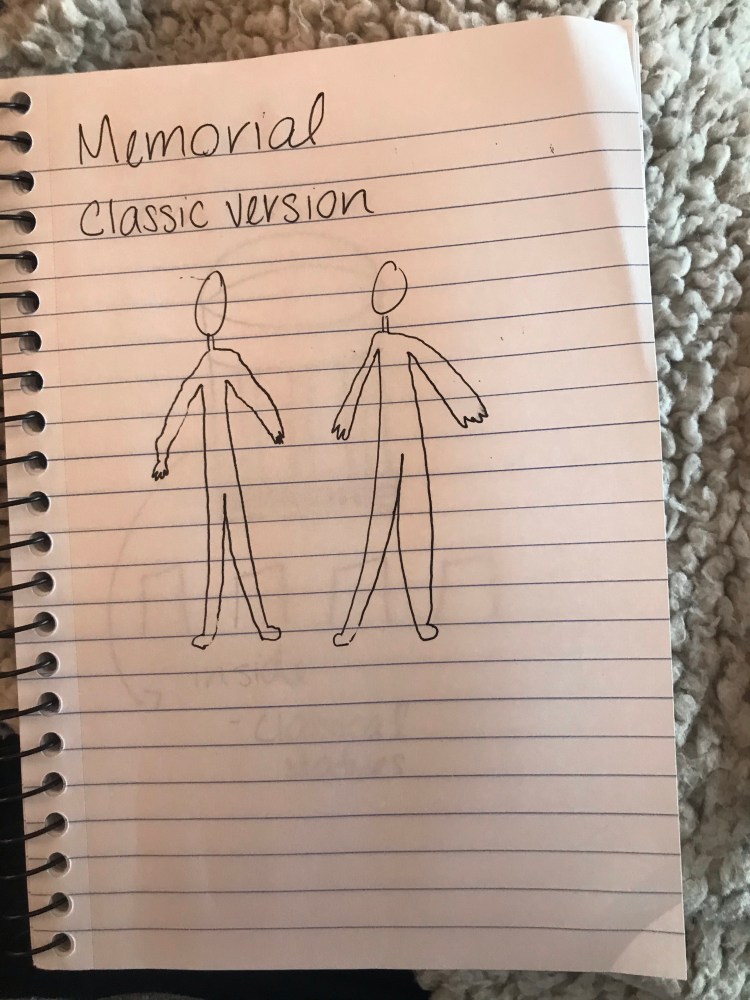
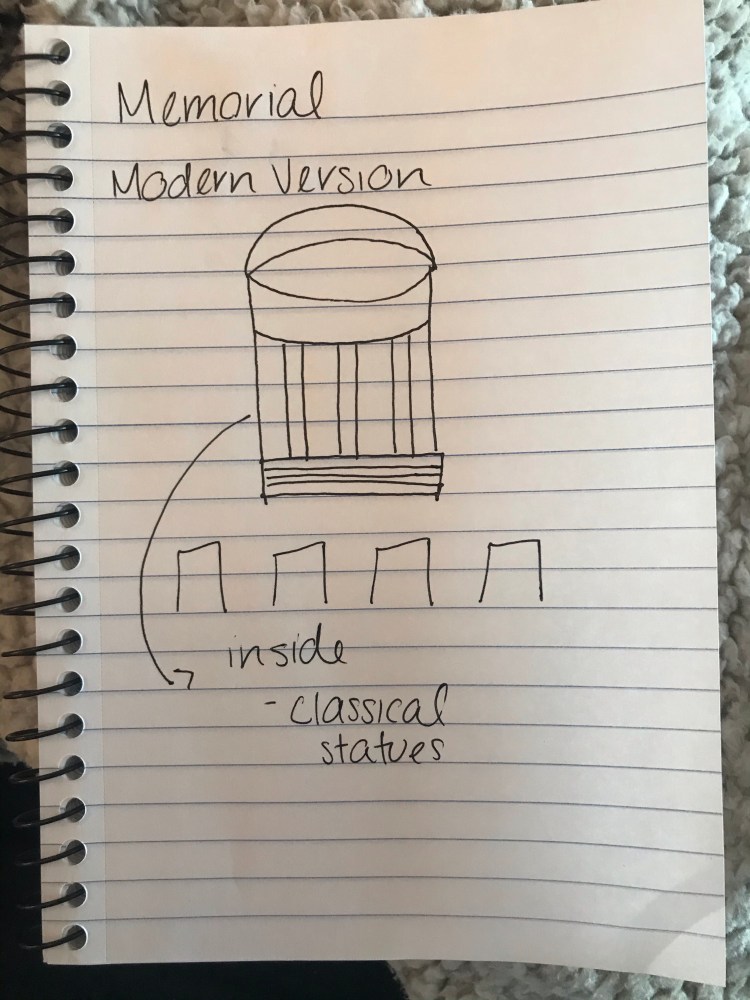
If I were to design a memorial to Brutus and Cassius, I would do it much differently today then I would have done it in 44 BC. The classical version of my memorial would be very similar to the Harmodius and Aristogiton monument. I would be the statues of Brutus and Cassius facing each other, most likely naked and standing in a powerful pose. Brutus would be holding a knife and Cassius would be slightly behind him. This is almost a copy of the Harmodius and Aristogiton monument, but it is the style that things were back then. If i were to make this memorial in he modern day I would have a small dome with columns lining the outside. Inside the dome would be the great statues of Brutus and Cassius. And outside of the dome I would have plaques that would have famous sayings and commemorate what had happened there. This would be a little more complicated in the space that is currently at this location, but I would probably but it in the middle of the plaza.

Short video of you at Trajan’s Column describing one feature of the column’s frieze. How many times does the frieze circle the column?

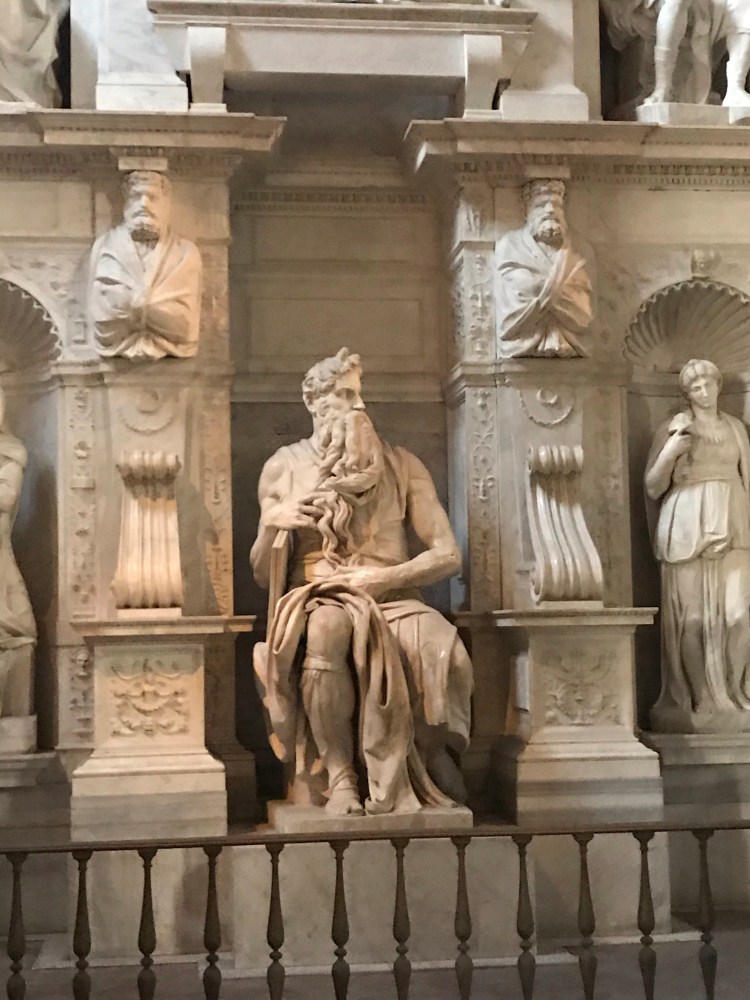
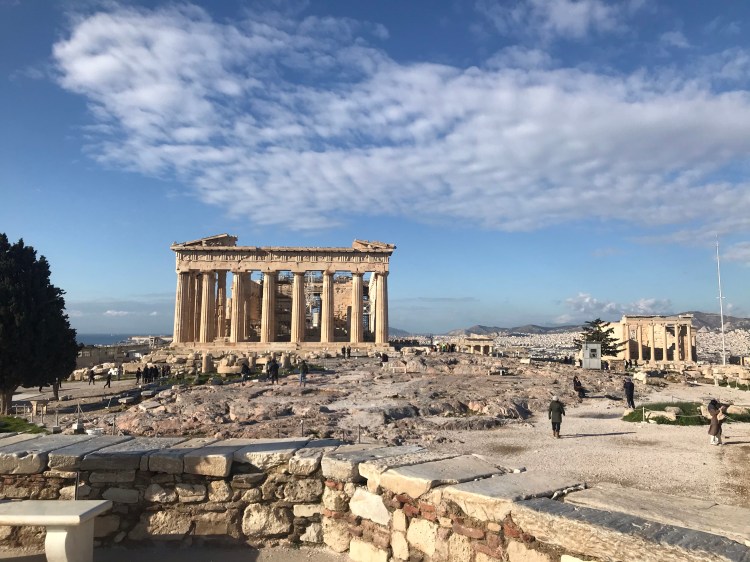
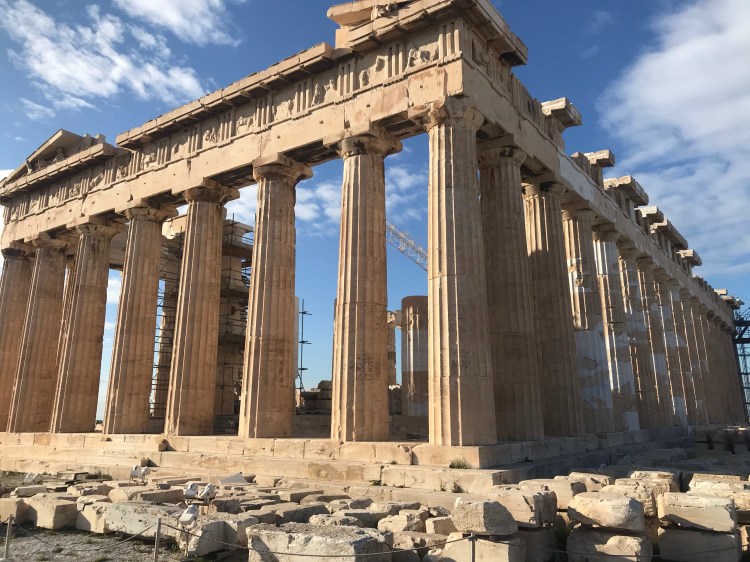
Michelangelo’s Moses: briefly compare Freud’s account of the Acropolis to his account of Michelangelo’s Moses. Pictures of both.

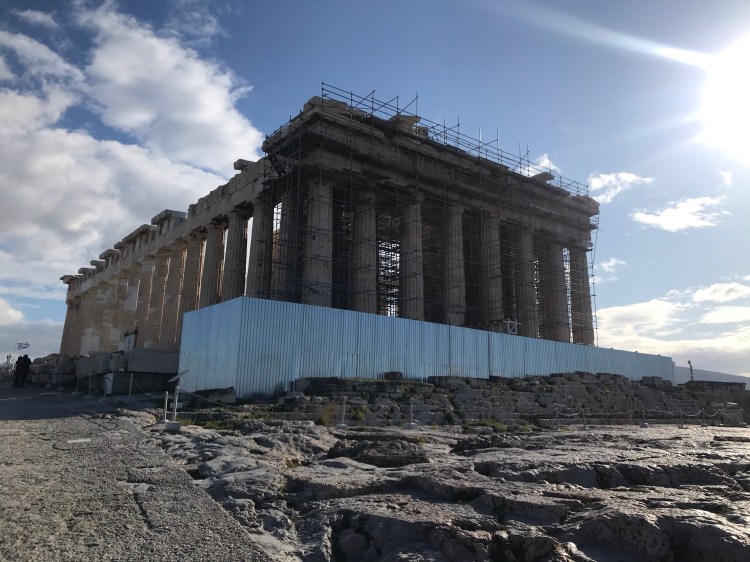
Freud’s account of the Acropolis is very different from his account of Michelangelo’s Moses. In his account of the Acropolis he is writing a letter to a friend and he is more describing the human behavior of the person who is seeing this monument. He goes into depth on how people might feel when they see the monument and how he felt when he saw it. On his account of the Moses, he is more trying to analyze the statue of Moses and what he is thinking at the moment. He also talks a lot about Michelangelo’s intentions when building this monument, and how great pieces of art like this one always rely on the intentions of the artist who make them. In all I think the two accounts are similar that they talk about human emotion attached with monuments, but I think he is talking about two different sides of this human emotions. So to say in the Moses he is talking more about the artist and the subject, but in the Acropolis he is talking more about the viewer.

Assignment #6

I interviewed two people in Athens about the importance of monuments. I asked if they have a favorite secret monument in Athens. When was the last time they visited a monument in Athens? What monument would they add/change/remove? Do the monuments play a role in the relationship of Greece to Europe? If they feel personally connected to that monument. And if they think that monument is a representation of Greece to the world. Write 500 words describing the results of your interview. Organize this material according to a clear thesis. Post to your blog.

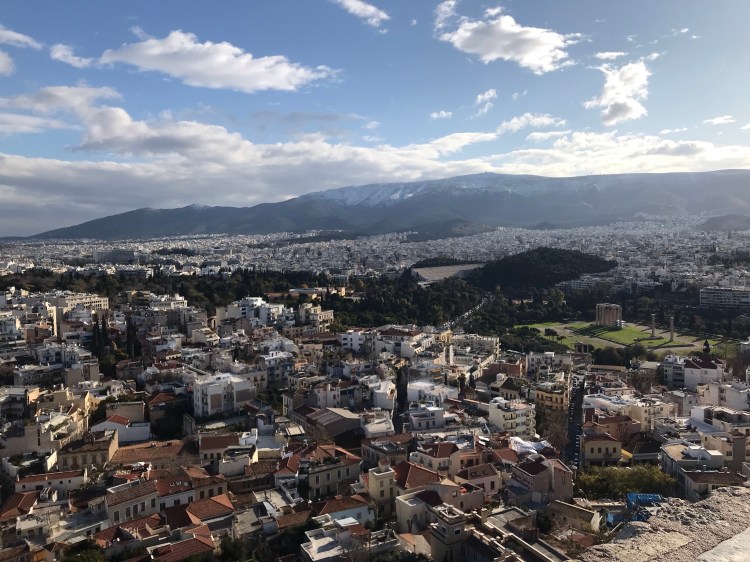
I interviewed two people walking through Monastiraki square about their takes on monuments in Greece and how they thought they contributed to the outside world. One woman told me that her favorite monument was the Acropolis and the other women said it was a monument outside of Athens that we probably wouldn’t recognize. Despite having favorite monuments both women said they don’t go very often and haven’t gone in a long time. They described to me that they believed the monuments to be important to the tourism in Greece, but not to the Greek people. Despite this neither women said that they would change anything about the monuments. They both believed that the monuments represented Greece to the world. Although I interviewed both of these women separately, they both had the same concept and feeling toward the monuments. Neither one of them resented the monuments, but they were aware that the monuments weren’t for them they were actually for the tourist. I believe both women were able to understand that these monuments meant something to the world and were important to Greece. One women described to us that she enjoyed the history of ancient Greece, and since the monuments teach us so much about ancient Greece she enjoyed them.

When thinking more about this concept it makes sense that the people of Greece would feel this way. Seeing that tourism is the industy this is kind of saving the economy and the monuments are heavily related to this industry, the Greek people see that the monuments are for other people not for themselves.

Going to the monuments I have definitely had the feeling that this is something I only really need to see once in my life and I might never come visit again. I assume the people who live here have that same kind of feeling, where they go to the monuments once as a kid and feel that they never have to come again because they already went once. That might also be another reason that people feel that they don’t personally connect with the monuments, you always see them and they are always there, but if you aren’t going often and you don’t relate to the reason that they are there then you might not feel as personally connected.

I found it a little strange that the women didn’t have a very different answer for if the monuments represented Greece globally or in the European Union. I thought they would have more feelings about the European Union and how they have been kind of forced to make tourism a huge market, while they might now have the same animosity toward the rest of the globe. I also assumed that the women would have a take on the western influence of the monuments, but maybe people don’t think as politically as I do about monuments, especially here taking this specific class.

In conclusion I think what the women described to me is a very nationalist identity. They understand that the monuments are important to the world, and when an American came up to them and asked about the monuments they felt proud about them and didn’t want to take it away, but realistically they don’t feel personally connected or like the monuments represent them they represent the nation.

Design a site like this with WordPress.com
Get started